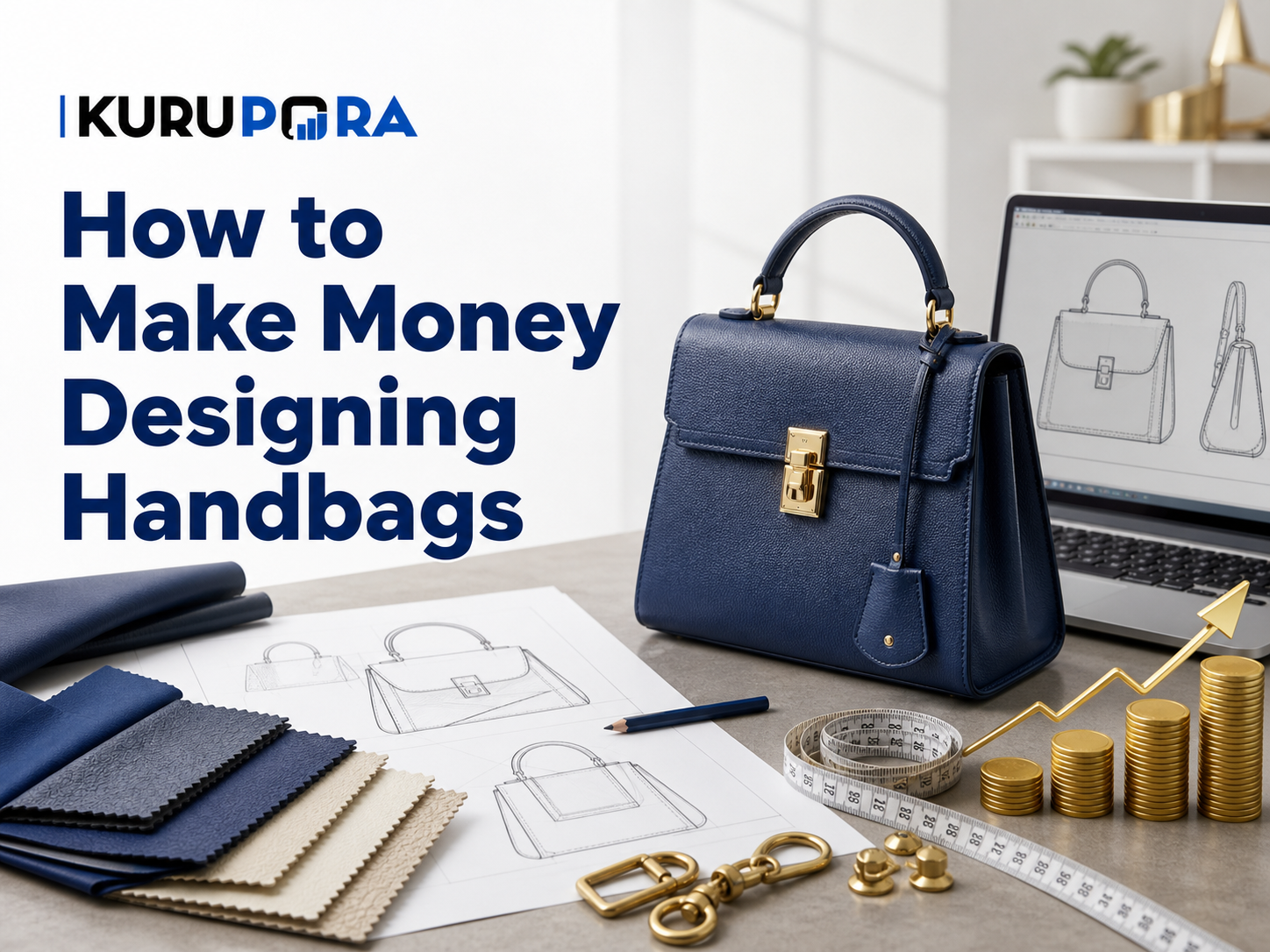
How to Make Money Designing Handbags
A profitable handbag business needs more than an attractive sketch. The design must solve a problem for a specific customer, be practical to manufacture, and sell for enough money to cover every expense behind it.
You do not need a fashion degree, a large factory order, or a luxury showroom to begin. Independent designers can start with handmade pieces, limited collections, freelance work, licensing agreements, or pre-orders. The sensible route is to test demand on a small scale before investing heavily in inventory.
Here is how to make money designing handbags while keeping costs and risks under control.
Choose How You Will Earn Money
Selling bags under your own label is only one business model. Your skills can generate income in several ways:
- Design and sell handmade or small-batch handbags.
- Create custom bags for individual clients.
- Launch a direct-to-consumer handbag brand.
- Work as a freelance designer for established companies.
- License original designs to manufacturers.
- Sell sewing patterns, templates, or handbag-making courses.
- Offer design consultation and technical drawing services.
Each model requires different resources. A handmade business gives you control over quality and customization but limits how many orders you can complete. Factory production makes scaling easier, although it usually requires more capital and careful quality control. Freelancing and licensing involve less inventory risk, but you need a strong portfolio and clear contracts.
Many new designers combine two models. For example, you might sell a small signature collection while accepting higher-priced custom commissions.
Find a Specific Handbag Niche
Trying to design for everyone usually produces a forgettable product. Begin with a clearly defined customer and use case.
You could specialize in lightweight work totes, premium vegan handbags, compact travel bags, convertible backpacks, occasion clutches, adaptive bags for customers with limited mobility, or durable bags for parents. A useful niche is narrow enough to differentiate your work but large enough to support repeat sales.
Study competing products and customer reviews. Look for complaints about uncomfortable straps, weak hardware, poor internal organization, heavy materials, insecure closures, or compartments that do not fit current devices.
The U.S. Small Business Administration’s market research guidance recommends examining demand, market size, saturation, customer location, and the prices buyers already pay. You can also interview potential customers, share concept drawings, or test several designs with a small email or social media audience.
Compliments are encouraging, but purchase intent is stronger evidence. A waiting-list signup, refundable deposit, or clearly managed pre-order tells you far more than likes alone.
Turn the Idea Into a Manufacturable Design
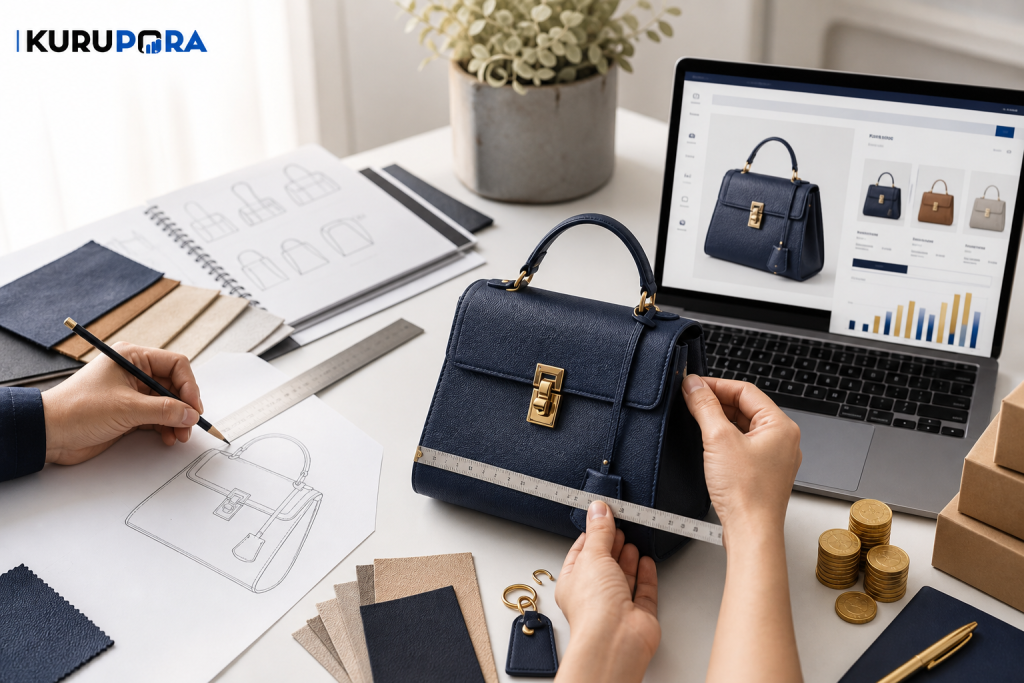
A commercial handbag design must work away from the sketchbook. Before producing inventory, create a specification sheet or tech pack containing:
- Measurements and construction details
- Front, back, side, and interior drawings
- Materials, lining, hardware, and color references
- Strap lengths and adjustment ranges
- Pocket placement and closure types
- Stitching and edge-finishing instructions
- Logo position and packaging requirements
Then make a prototype. Carry it, load it with realistic items, open it with one hand, check the balance, and test likely stress points. Ask people in your target market to use it and explain what feels awkward.
Small corrections at the sample stage are cheaper than repairing or replacing an entire production run.
Select the Right Production Method
If you have sewing and leatherworking skills, producing the first pieces yourself can keep the initial order small and support premium handmade pricing. Track your labor honestly; time is a product cost, even when you are the person doing the work.
A local sample maker or small workshop is useful when you need professional construction without committing to a large factory order. For higher volumes, request quotes from several manufacturers and compare more than the price. Ask about minimum order quantities, sample charges, production time, material sourcing, payment terms, defect policies, and experience with similar bags.
Never place a large order based only on photographs. Approve a physical sample, confirm the specifications in writing, and consider a production inspection before the final balance is paid.
Another low-risk option is a limited drop or made-to-order collection. Customers may accept a longer delivery time when the schedule is stated clearly.
Price Every Bag for Profit
Underpricing is one of the quickest ways to turn a promising design into an expensive hobby. Calculate the full cost of each sale, including:
- Outer material, lining, hardware, thread, and labels
- Production labor
- Sampling and development costs
- Packaging
- Freight, duties, and import charges
- Payment and marketplace fees
- Shipping subsidies
- Returns, defects, and replacements
- Advertising or customer acquisition
- Business overhead and taxes
Suppose a bag sells for $169 and its variable costs total $84. The amount remaining is $85, giving a contribution margin of approximately 50.3%:
($169 − $84) ÷ $169 × 100 = 50.3%
That $85 is not necessarily net profit. Rent, software, photography, unsold samples, professional services, and tax still have to be paid. Shopify’s profit margin explanation and calculator uses the same basic formula: selling price minus cost, divided by selling price.
Calculate prices separately for direct sales and wholesale. A price that works on your website may fail when a retailer needs its own margin. If wholesale is part of your plan, build that requirement into the retail price from the beginning.
Build a Recognizable Brand
Customers rarely buy an unfamiliar handbag purely because it exists. They buy a combination of design, function, identity, and trust.
Choose a memorable brand name and check business registries, domain availability, social platforms, and relevant trademark databases before investing in packaging. Develop a consistent visual style, but give shoppers concrete reasons to care: thoughtful organization, unusual craftsmanship, responsible material choices, repairability, limited production, or customization.
Protecting a name is different from protecting a product’s appearance. In the United States, a trademark can protect brand identifiers such as a name or logo, while a design patent may protect a new and original ornamental product design. The USPTO explains these distinctions, but rights and registration procedures vary by country. Speak with a qualified local professional before relying on a particular form of protection.
Keep dated sketches, sample invoices, contracts, and production records. Your agreement with a freelancer or manufacturer should also state who owns the drawings, patterns, molds, and final design.
Choose Sales Channels That Fit the Product
Your own online store gives you more control over presentation, customer information, and brand experience. However, you must generate your own traffic.
Marketplaces can provide faster access to active shoppers. Etsy may suit handmade, personalized, or independently designed bags, but fees must be included in your calculations. Its current policy lists a $0.20 listing fee and a 6.5% transaction fee, with payment-processing, advertising, regulatory, and tax-related charges potentially applying as well. Check the latest Etsy fees policy before setting prices.
Other useful channels include craft and design markets, pop-up shops, boutiques, social commerce, and wholesale platforms. Choose one or two channels initially. Managing five poorly maintained storefronts is less effective than building one dependable source of sales.
Product pages should show the bag from several angles and include an interior view, scale reference, dimensions, strap drop, weight, materials, care instructions, delivery time, and return terms. A short video demonstrating capacity and movement often answers questions that still photographs cannot.
Launch With a Small, Focused Collection
A first collection does not need twelve unrelated styles. One strong design in two sizes or several carefully selected colors is easier to explain, photograph, stock, and improve.
Build interest before release by sharing prototypes, material decisions, wear tests, and genuine design problems you solved. Collect email addresses rather than depending entirely on social media reach. Send early samples to a small number of creators whose audiences match your customer, and ask for honest demonstrations instead of scripted praise.
For paid advertising, begin with a controlled budget. Measure conversion rate, cost per customer, return rate, and profit per order. Revenue can look impressive while the business loses money after advertising and fulfillment.
Increase the Value of Each Customer
Handbag businesses become stronger when existing buyers return. Add complementary items such as straps, organizers, pouches, wallets, or care products. Offer repairs or replacement hardware when practical. Limited colors and seasonal materials can create newness without requiring a completely new construction pattern.
Pay attention to which products are reordered, returned, or frequently recommended. Produce more of proven designs and discontinue products that absorb cash without generating a healthy margin.
Frequently Asked Questions
Do I need a degree to become a handbag designer?
No. Construction knowledge, a strong portfolio, accurate specifications, and an understanding of customers are usually more valuable than a particular qualification. Courses can shorten the learning process, but prototypes and finished work demonstrate what you can do.
How much money is required to start?
The amount depends on your materials, production method, order size, and sales channel. A made-to-order operation can begin relatively lean, while factory production may require substantial spending on sampling and inventory. List one-time and monthly expenses before committing funds. The SBA provides a useful startup cost checklist.
Can I sell a handbag design without manufacturing it?
Yes. You can license the design, provide freelance design services, sell patterns, or deliver a tech pack to a brand. Use a written agreement covering payment, revisions, confidentiality, ownership, and whether compensation is a flat fee or royalty.
What information should material claims include?
Descriptions must be accurate. Do not describe synthetic material as leather or make unsupported claims about origin or sustainability. Requirements depend on where the product is sold. For example, the U.S. Federal Trade Commission maintains guidance covering leather, imitation leather, and handbag labeling.