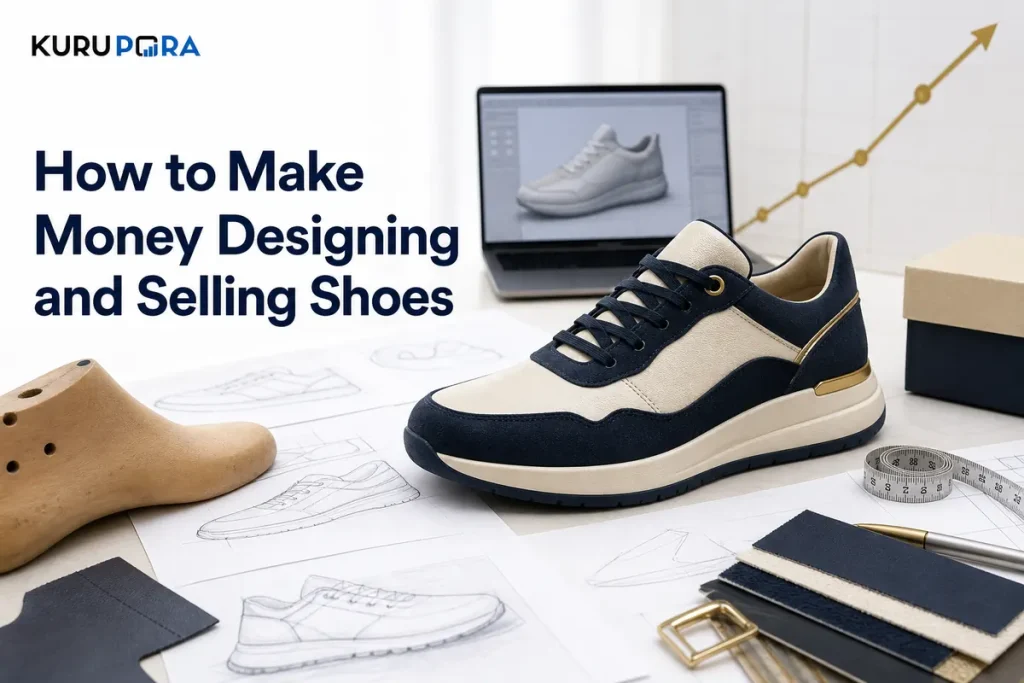
How to Make Money Designing and Selling Shoes
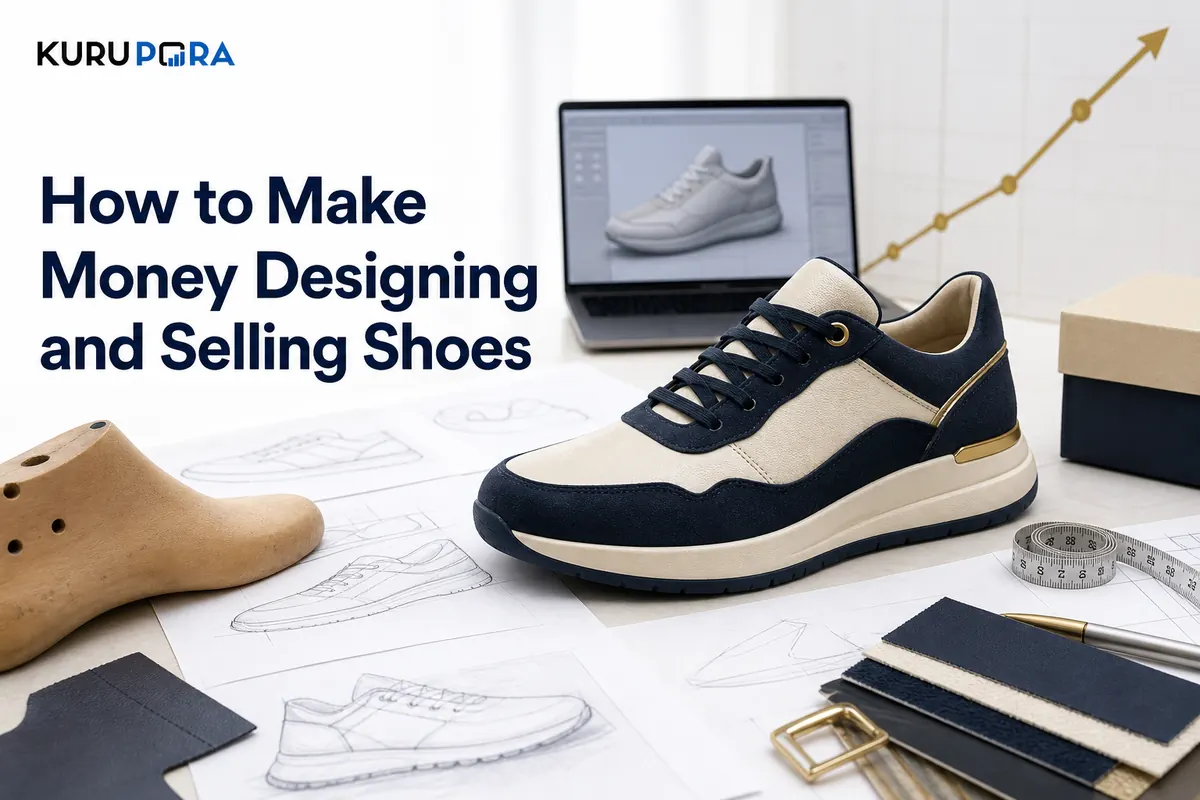
A successful shoe business needs more than an attractive sketch. The design must fit real feet, survive regular use, be practical to manufacture, and sell at a price that covers development, production, returns, and marketing.
You do not need to begin with a large factory order. Independent designers can start with custom shoes, handmade production, freelance design, licensing, limited collections, or carefully managed pre-orders. The safest approach is to prove that customers want the product before spending heavily on inventory.
Choose a Footwear Business Model
Designers can earn money from footwear in several ways:
- Launch an independent shoe brand.
- Make custom or handmade shoes for individual clients.
- Customize or upcycle legally sourced, unbranded footwear.
- Work as a freelance footwear designer.
- License original designs to manufacturers.
- Sell technical drawings, patterns, or footwear-development services.
- Use a production partner to manufacture original designs.
Each model has different risks. Custom work requires less inventory but depends heavily on your time. Factory production is easier to scale, although it requires more capital and quality control. Freelance design and licensing avoid stock risk, but contracts must clearly define ownership and payment.
A designer may combine several models—for example, accepting custom commissions while developing a small branded collection.
Find a Specific Footwear Niche
Designing “shoes for everyone” rarely gives customers a reason to choose a new brand. Focus on a particular wearer, activity, aesthetic, or problem.
Possible niches include wide-fit office shoes, lightweight travel sneakers, premium house shoes, minimalist formal footwear, adaptive shoes, small-size or large-size collections, vegan occasion shoes, and durable work footwear for a particular profession.
Research existing products, prices, customer reviews, and return complaints. Look for recurring problems involving width, weight, arch support, durability, difficult fastenings, slippery soles, or inconsistent sizing.
The U.S. Small Business Administration recommends examining demand, market size, saturation, customer location, competing products, and the prices buyers already pay. Speak directly with potential customers and test several concepts before committing to one.
Likes and compliments are weak evidence. Waiting-list registrations, refundable deposits, or properly managed pre-orders provide a clearer indication of purchase intent.
Turn the Sketch Into a Technical Design
A factory or sample maker cannot work reliably from one attractive illustration. A commercial design requires a detailed specification sheet or footwear tech pack.
It should include:
- Top, side, rear, outsole, and interior views
- Measurements and proportions
- Upper, lining, insole, midsole, and outsole materials
- Stitching, seams, reinforcement, and edge-finishing details
- Lace, buckle, zipper, eyelet, and hardware specifications
- Colors and material reference codes
- Branding and packaging placement
- Size range and grading requirements
- Construction method and quality tolerances
Ask the sample maker which information is missing before approving production. Every decision left open to interpretation can produce inconsistent results.
Understand Shoe Lasts and Sizing
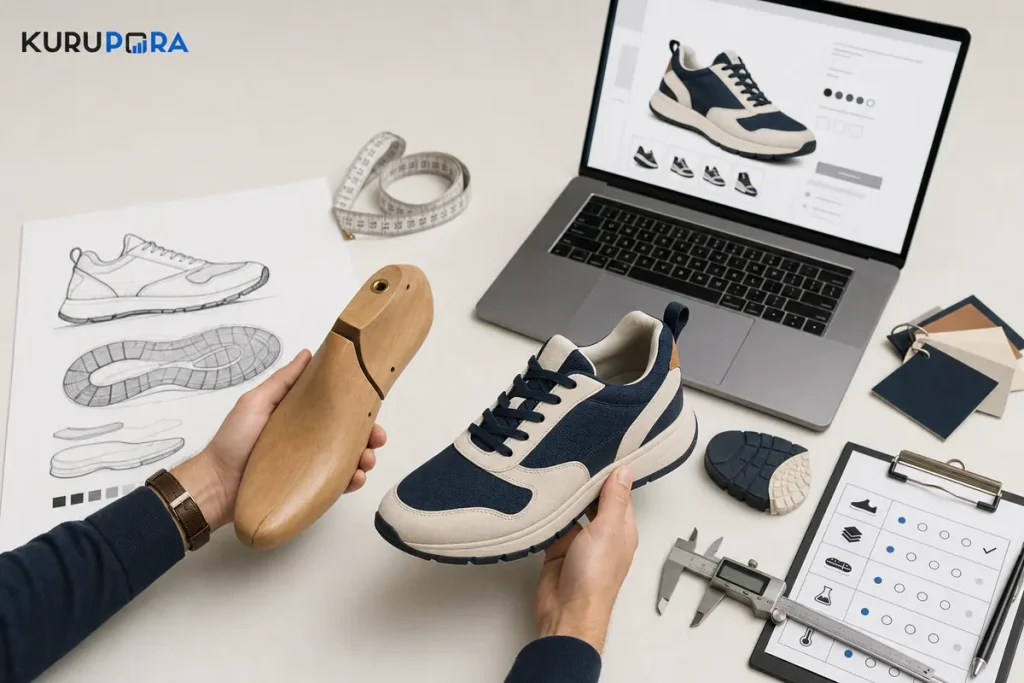
A shoe last is the three-dimensional form around which footwear is developed. It influences length, width, toe shape, heel position, volume, and the overall fit.
An attractive upper cannot correct a poorly chosen last. Select or develop a last for the intended customer and test it in the sizes you plan to sell. Scaling a single sample up and down without proper size grading can create uncomfortable proportions.
Footwear sizes are also not perfectly consistent across brands or markets. Product pages should provide useful measurements and fit guidance rather than relying only on labels such as US 8, UK 6, or EU 39.
Build and Test a Prototype
Create at least one physical prototype before ordering inventory. Inspect the construction, then conduct realistic wear tests.
Check:
- Comfort after extended use
- Heel movement and pressure points
- Toe room and width
- Flexibility at the correct part of the foot
- Sole grip
- Stitching and adhesive strength
- Hardware security
- Material creasing and color transfer
- Performance in expected weather conditions
Use testers with different foot shapes, not only people whose feet resemble your own. Record every issue and revise the specification before approving a production sample.
A shoe that photographs well but causes discomfort will generate returns, poor reviews, and expensive replacements.
Select a Production Method
Handmaking the first orders can support premium pricing and allow close quality control. Track your labor honestly; unpaid personal time still represents a production cost.
A local sample room or small footwear workshop may offer lower minimum orders and easier communication. Overseas factories can provide specialized equipment and larger capacity, but freight, duties, lead times, inspections, and communication require careful management.
When comparing manufacturers, ask about:
- Minimum order quantities
- Sample and development fees
- Last and mold ownership
- Material sourcing
- Size grading
- Production lead times
- Payment terms
- Defect tolerances
- Testing capabilities
- Packaging and shipping
- Policies for rejected goods
Approve a physical production sample and written specifications before paying for a full run. For a large order, consider an independent inspection before the final balance is released.
Price Shoes for Real Profit
The factory price is only one part of the cost. Include:
- Design and sample development
- Lasts, molds, and tooling
- Unit production
- Packaging
- Freight, duties, and customs charges
- Warehousing and fulfillment
- Payment and marketplace fees
- Shipping subsidies
- Returns, exchanges, and defects
- Photography and content
- Advertising and customer acquisition
- Business overhead and taxes
Suppose a pair sells for $160 and the variable costs associated with that sale total $88. The contribution is $72:
$160 − $88 = $72
The contribution margin is:
$72 ÷ $160 × 100 = 45%
That is not necessarily net profit. Software, salaries, professional services, unsold inventory, sample costs, and taxes still need to be paid. Shopify’s profit margin calculator uses the same basic formula: selling price minus cost, divided by selling price.
Calculate direct-to-consumer and wholesale prices separately. If a retailer needs its own margin, the wholesale price must still cover your production, operating costs, and profit. Build this requirement into the intended retail price before manufacturing.
Create and Protect the Brand
Search proposed brand names before purchasing packaging, domains, or labels. Check business registries, search engines, social platforms, and relevant trademark databases.
A trademark generally protects identifiers such as a brand name or logo. A design patent may protect a new, original, and ornamental product appearance in the United States. These rights are different, and protection is territorial. The USPTO explains trademark basics and provides separate guidance for design patent applications.
Keep dated sketches, tech packs, sample invoices, emails, and contracts. Agreements with designers, factories, and freelancers should state who owns the design files, patterns, lasts, molds, tooling, and final product design.
Avoid copying recognizable silhouettes, decorative elements, logos, or signature patterns from established footwear brands.
Comply With Product and Labeling Rules
Describe materials accurately. Do not call synthetic material leather or advertise footwear as waterproof, sustainable, orthopedic, or slip-resistant without evidence supporting the claim.
In the United States, the FTC’s Leather Guides address potentially misleading claims about leather and imitation-leather products, including footwear.
Children’s footwear may carry additional testing, certification, material, and tracking requirements. The U.S. Consumer Product Safety Commission explains that children’s products subject to applicable safety rules may require third-party testing and a Children’s Product Certificate.
Requirements vary by product and sales market. Consult the relevant authorities or a qualified compliance professional before placing an order.
Choose the Right Sales Channels
An independent online store provides control over presentation, customer information, and brand experience, but you must attract your own visitors.
Other options include marketplaces, pop-up shops, design fairs, boutiques, wholesale accounts, social commerce, and pre-order campaigns. Etsy permits original seller designs produced with assistance, but sellers must disclose relevant production partners and follow its current Creativity Standards.
A footwear product page should show:
- Multiple exterior angles
- The outsole and interior
- On-foot photographs or video
- Size and width guidance
- Materials and care instructions
- Heel height and product weight where relevant
- Shipping times
- Exchange and return terms
Fit uncertainty is a major barrier to buying shoes online. Clear guidance and a straightforward exchange process can matter as much as the photographs.
Launch a Focused First Collection
A first collection does not need ten unrelated designs. One strong silhouette in two colors is easier to sample, photograph, explain, stock, and improve.
Build interest by showing genuine parts of the process: sketches, material selection, prototype corrections, sole tests, and fit sessions. Collect email addresses before launch instead of depending entirely on social media reach.
Begin paid advertising with a controlled budget. Track conversion rate, customer-acquisition cost, exchange rate, return rate, contribution per order, and repeat purchases. Revenue alone does not show whether the collection is profitable.
Grow From Proven Products
Reorder styles that sell at a healthy margin and receive good fit feedback. New colors, materials, laces, insoles, and care products can increase revenue without requiring a completely new construction.
Use return reasons to improve sizing and product descriptions. A growing order count is not useful if avoidable fit problems consume the margin.
Frequently Asked Questions
Do I need a degree to become a shoe designer?
No specific degree is required to start an independent footwear business. However, knowledge of construction, materials, lasts, technical drawing, and manufacturing is essential. A strong portfolio and well-developed prototypes usually demonstrate ability more clearly than a qualification alone.
How much does it cost to start a shoe brand?
The cost depends on the construction method, tooling, sample rounds, materials, minimum order, size range, testing, freight, and sales channel. Custom or made-to-order production can begin more gradually. A factory-produced collection may require substantial spending before the first sale.
Can I sell shoe designs without manufacturing them?
Yes. You can work as a freelance designer, license designs, sell technical-development services, or create patterns and tech packs for brands. Use a written agreement covering fees, revisions, confidentiality, ownership, royalties, and payment dates.
Is print-on-demand footwear profitable?
It can reduce inventory risk, but product choice, construction, fit consistency, customization limits, shipping time, and margins depend on the supplier. Order and wear-test samples before selling. A printed graphic alone may not provide enough differentiation in a crowded market.